 Panacea Bio Chem · Review
Apitherapy Bioactives
Updated Sep 2026
Updated Sep 2026
Panacea Bio Chem · ReviewTwo jars of propolis can be chemically different substances. That single fact explains the folklore, the contradictory reviews, the untidy clinical literature — and what has to be fixed before any of this chemistry becomes dependable.
Propolis and bee-pollen bioactives are the active molecules of the beehive: the flavonoids and phenolic esters of propolis — including CAPE and, in green propolis, artepillin C — the proteins, free amino acids and small peptides of bee pollen, and the colony's own antimicrobial peptides. Studied under the banner of apitherapy, these molecules carry antioxidant, antimicrobial, anti-inflammatory and nourishing properties. The mechanistic evidence for several of these molecules is genuinely strong. The evidence that any given jar will deliver them is not, and the reason is chemical rather than commercial: propolis is not one substance but at least five, sorted by the plants a hive can reach. This review sets out what the molecules are, how the best-characterised of them work, how authenticity is actually tested, what the strongest case against the field looks like, and where Apimimetix — Panacea Bio Chem's preparation, mimicking and extracted from propolis and bee pollen, engineered by Bogdan Dicoias — aims at the part of the problem that is an engineering problem. (Api- here is apis, the honeybee. Everything on this page is about bees.)
Topic: propolis & bee-pollen bioactives (apitherapy) | Class: hive-derived phenolics, amino acids & peptides | Programme: Apimimetix (Panacea Bio Chem)
A beehive is forty thousand warm bodies in a humid box, which is close to a definition of a microbiological disaster. It is also one of the cleanest crowded spaces in nature. The colony achieves that with chemistry, and two of its products carry most of what science studies.
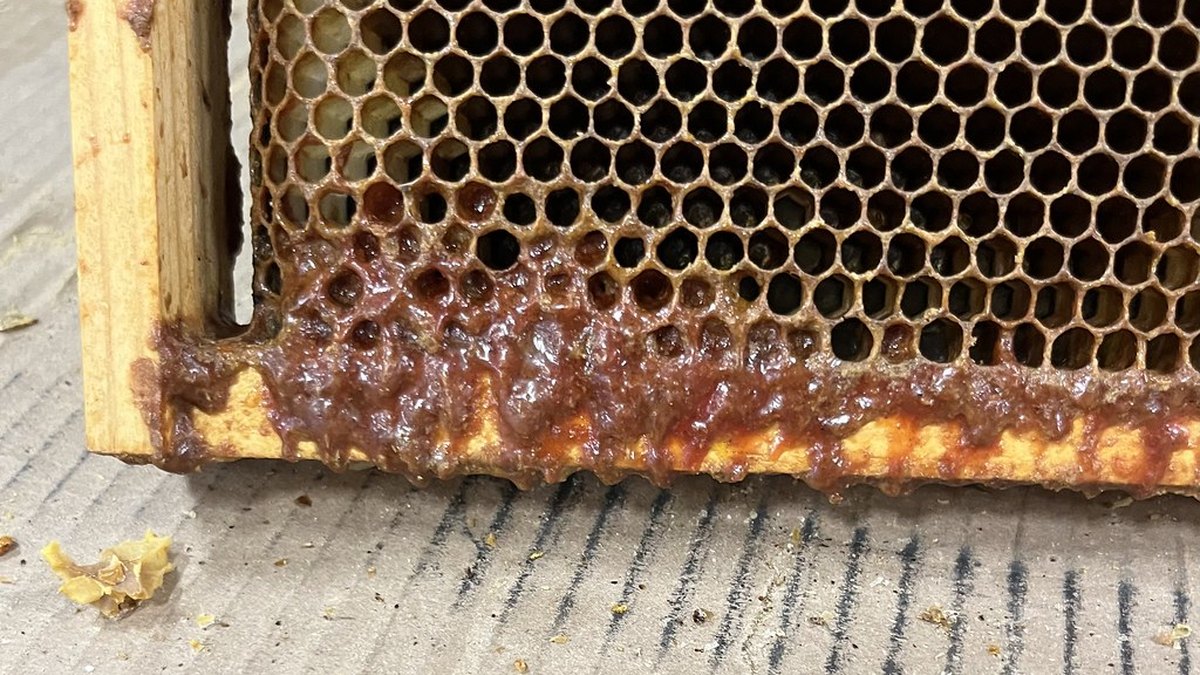
Propolis, sometimes called bee glue, is resin gathered from tree buds and wounds, blended with beeswax and the bee's own enzymes, and used to varnish the hive, seal gaps and entomb intruders too large to carry out. Chemically it is a dense mixture of flavonoid aglycones — galangin, pinocembrin, chrysin, apigenin — together with phenolic acids and their esters, of which the most studied is CAPE, caffeic acid phenethyl ester (C17H16O4). These are plant defence molecules. The bee did not invent them; it collected them, and in doing so concentrated a forest's antimicrobial armour into a wall lining.
Bee pollen is floral pollen packed into pellets with nectar and salivary secretions. Fermented in the comb by enzymes and lactic-acid bacteria it becomes bee bread, a transformation that measurably changes its bioactivity and bioaccessibility18. Pollen runs between 12% and 30% protein depending on the source plant, and an unusually high share of that — 34% to 48% — is essential amino acids12. It is one of the most nutritionally complete materials an animal collects.
This is the fact that reorganises everything else on this page, and it is the fact most consumer material omits. Propolis is named after a behaviour, not a composition. Bees make it from whatever resinous plants are within flying distance, so the chemistry sorts itself by geography into recognisable chemotypes10,11:
| Type | Source plant | Signature chemistry |
|---|---|---|
| Poplar / temperate Europe, N. America, temperate Asia | Populus spp. bud exudate | Flavonoid aglycones (flavones and flavanones), phenolic acids and their esters — this is the type that contains CAPE |
| Brazilian green | Baccharis dracunculifolia | Prenylated p-coumaric acid derivatives and acetophenones, diterpenes, lignans — the type defined by artepillin C (C19H24O3) |
| Brazilian red | Dalbergia ecastophyllum | Isoflavonoids — a different flavonoid subclass entirely |
| Mediterranean | Cupressus sempervirens | Diterpene-rich, comparatively flavonoid-poor |
| Russian / birch | Betula verrucosa | Flavones and flavonols |
Read that table once and several puzzles dissolve. A trial of "propolis" in São Paulo and a trial of "propolis" in Sofia may share a word and not a molecule. A supplement review that contradicts your own experience may be describing a different chemotype. And CAPE — the single most cited propolis molecule — is a poplar-type marker. A jar of Brazilian green propolis is not a weak source of CAPE; it is largely not a source of CAPE at all.
The variability is not a quality-control failure. It is what the material is. The failure is labelling five substances with one word.
Behind the folk reputation sits a genuinely interesting molecular cast, and the mechanistic literature on several members of it is specific enough to name pathways.
A note on scope. Bee venom — melittin, apamin, phospholipase A2 — is not covered here and is not part of this subject. It is a different material with a different risk class, and treating resin, pollen and venom as one field called "apitherapy" is a large part of how the field acquired its reputation.
Most antimicrobial peptides work the blunt way: they are cationic, they find the anionic bacterial membrane, and they tear it. Apidaecin, which honeybees have been making for rather longer than we have been making antibiotics, does something else entirely.
It enters the bacterium and binds inside the ribosomal exit tunnel. There it waits for the ribosome to finish a protein — and at the moment of termination it traps the class-1 release factor, RF1 or RF2, in the A site, after the finished chain has already been released. The ribosome cannot let go. The release factors are progressively sequestered; trailing ribosomes queue up behind the stalled one; and with termination failing across the cell, ribosomes begin reading straight through stop codons and producing proteins with nonsense C-terminal extensions1,9.
No clinical antibiotic in use works this way. The apidaecins are not one molecule either but a sequence family, and the tolerated variation across that family is now mapped21. A bee, defending a nest against bacteria, arrived at a target that human medicinal chemistry did not — and it is sitting in the same hive as the resin sold on the supplement shelf.
Propolis exists because a hive is a dangerous place to live. Foragers scrape defensive resin from tree buds — the tree's own armour, evolved to protect fresh growth — carry it home, and work it with wax and enzymes. In effect the colony borrows a forest's chemical defences and lines its walls with them, keeping the hive so clean that a mouse sealed inside can be mummified rather than rot.
Bee pollen tells the complementary half. A single pellet is a flower's genetic dowry, gathered, moistened and packed as the colony's larder. Two products of one insect, one for defence and one for nourishment, together make a pharmacy humans have used for at least five thousand years — and that science is still, jar by variable jar, working out how to read.
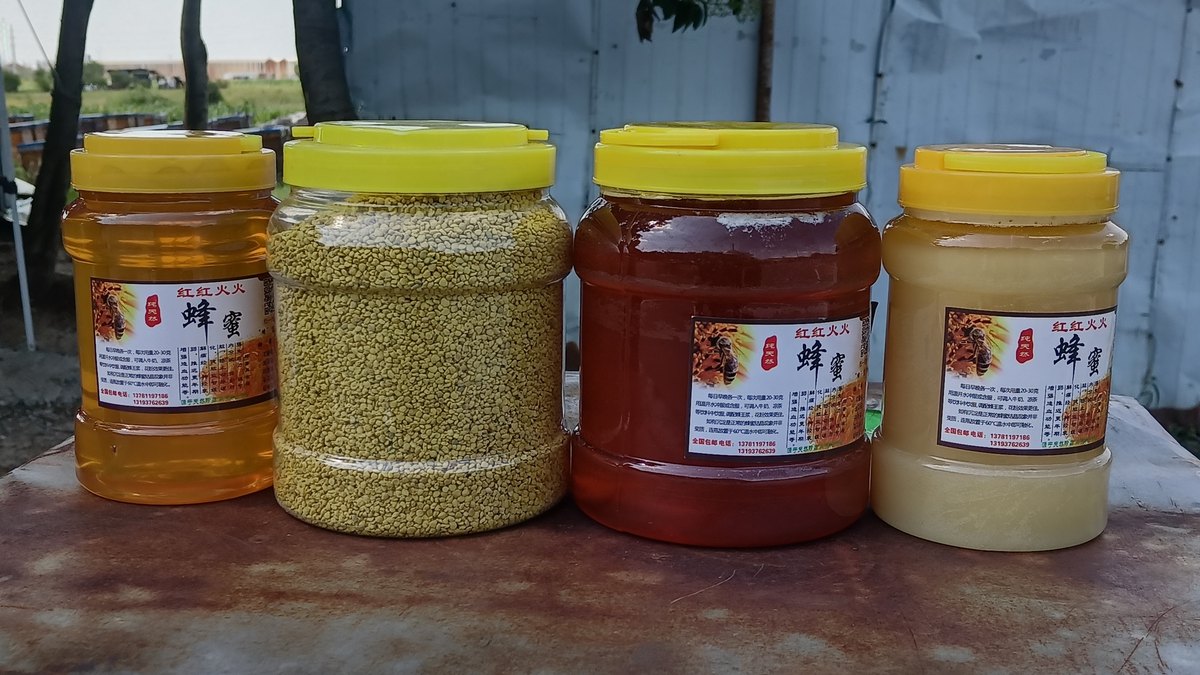
Ask an answer engine how to tell real propolis from fake and you will be given colour, smell and solubility in strong alcohol. Those tests are not worthless — they separate propolis from wax, sugar and dye. They are also blind to the adulteration that actually happens.
The commercially significant substitution is poplar bud extract, because poplar buds are where poplar-type propolis comes from, so the flavonoid profile of the adulterant closely resembles the profile of the genuine article. Colour and smell cannot see it. Chemistry can:
And standardisation already exists — just not where an English-language search will find it. China operates national standard methods for the determination of total flavonoids in propolis by spectrophotometric colorimetry, issued through the national bee-products standardisation committee, with a further national method covering multiple flavonoid classes in propolis and pollen by liquid chromatography19b. Russian pharmacy literature standardises propolis tincture by HPLC on total flavonoids expressed as kaempferol equivalents, and reports that roughly 84% of the flavonols present are kaempferol and its methoxy derivatives20. Two large regulatory traditions have written methods for a material the Western supplement market still sells unspecified. The obstacle is not that propolis cannot be standardised. It is that nobody has agreed on which standard, and nothing compels the label.
A page that cannot survive its own sceptics is not worth reading. Here is the strongest honest case against this subject, made as well as we can make it.
1. The clinical literature is arithmetic over non-comparable material. The clinical signal is not nothing — the 2026 review of propolis in oral mucositis reports reduced pain, dysphagia and lesion severity across studies13. But that same review, like every serious one before it, closes on the limitation: variability in chemical composition and the absence of standardised protocols limit reproducibility and comparability. Bankova named this "the problem of standardization" in 2005 and it is still cited as open11. Pooling trials of chemically different substances produces a number, not evidence. The honourable exception is a trial run on a defined extract: EPP-AF, a standardised Brazilian green propolis, in hospitalised COVID-19 patients — and honesty requires adding that the first such trial was open-label with no placebo, which its authors state22.
2. The star molecule has never been tested in a human as a therapy. CAPE is reviewed as one of the most promising natural anti-inflammatories in the literature, and the same review states that it has not been investigated as a protective agent or potential therapy in humans6. The reason is pharmacokinetic and specific: aqueous solubility below 10 µg/mL, and rapid hydrolysis to caffeic acid in plasma by a carboxylesterase23. CAPE's problem is not that it does nothing. It is that it does not survive to do it.
3. Natural does not mean harmless. Propolis 10% pet. was added to the European baseline patch-test series in January 2019 — the series reserved for allergens common enough that everyone gets tested. Positive reactions run 1.3–5.8% across regions and up to 7.6% in parts of central and eastern Europe; in one Amsterdam series the rate rose from 2.8% in 2020 to 16.4% in 2023, with frequent co-reactions to Myroxylon pereirae, colophonium and fragrance mixes14,15. Bee pollen has documented anaphylaxis, including a reported case of new-onset allergic asthma following bee-pollen anaphylaxis24. This is not an argument against the subject. It is the strongest argument in it for characterisation: you cannot reason about a reaction to a material nobody has defined.
4. Even the good news has a wall in front of it. Bee pollen's amino-acid profile is excellent and mostly unavailable. The outer pollen wall, the exine, is built of sporopollenin — one of the most chemically resistant biopolymers known — and it holds the contents in. Disrupt the wall and protein and crude-fat digestibility rise above 80%, with amino-acid release roughly half again as high27. Swallow it intact and much of what the label counts never reaches you.
5. A famous result is disputed in the journal that published it. Royalactin, the monomeric form of MRJP1, was reported in Nature in 2011 to induce queen differentiation in honeybees25. In 2016, in the same journal, Buttstedt and colleagues published "Royalactin is not a royal making of a queen"26. That disagreement is live. We are not going to resolve it in a paragraph, and any page that tells you royal jelly makes queens without mentioning the rebuttal is telling you half of a two-sided scientific argument.
What survives all five objections is worth being clear about, because it is not nothing: the molecules are real, several of their mechanisms are specific and reproducible, and the limiting factor across every objection above is the same one — nobody knows what is in the jar. Four of the five are, at root, a materials problem.
The route from a lump of resin to something a scientist can reason about runs through three steps, and they are the same three steps that govern any fragile, valuable natural molecule.
Extract selectively. Concentrate the flavonoids, phenolic esters and pollen peptides; leave wax and inert resin behind; and for pollen, break the exine, because an intact wall makes the analysis and the availability disagree. Characterise honestly. Fingerprint the material against a declared marker set, and say which chemotype it is. Then protect what you gathered. This last step is the one most often skipped, and it is where the losses are quiet: phenolics and peptides oxidise under heat, light, oxygen and time, so a material characterised at extraction and stored carelessly is no longer the material the certificate describes. A stabilised, oxygen-excluded, dried form is what guards that delicate chemistry against the light and air that would otherwise age it. Where a molecule is powerful but perishable, that is exactly the craft a Panacea designer-peptide programme → brings, and it is the seam Panacea Bio Chem works on hive bioactives.
| Source | Signature bioactives | Studied roles | The limiting problem |
|---|---|---|---|
| Propolis (resin) | Flavonoid aglycones (galangin, pinocembrin, chrysin); CAPE; artepillin C | Antioxidant, antimicrobial, anti-inflammatory, oral and wound care | Chemotype variability; CAPE hydrolysed in plasma |
| Bee pollen (pellets) | Protein 12–30%, essential amino acids 34–48% of total; flavonoids; vitamins, minerals, carotenoids | Nutritional, antioxidant | Sporopollenin exine limits release |
| Hive defence | Apidaecin, abaecin, hymenoptaecin, royalisin | A natural antimicrobial-peptide library with a distinct ribosomal mechanism | Peptide stability; oxidation |
| Royal jelly | 10-HDA; MRJPs / royalactin | Immune and metabolic research interest | Royalactin's queen-induction claim is disputed |
| Across all four: the wall between natural chemistry and a dependable preparation is characterisation plus preservation, not the biology. | |||
Panacea Bio Chem researches apitherapy-derived bioactives, and Apimimetix — the name drawn from apis, the honeybee — is the working name of a preparation that mimics and is extracted from propolis and bee pollen. Its thesis is simple, and it is the argument this page has been making: take the hive's genuinely beneficial chemistry — the antioxidant flavonoids and phenolic esters of propolis, the amino acids and small peptides of bee pollen — and solve the two things that have always held it back, variability and fragility, both of which are engineering problems.
Apimimetix is framed as a Peptourbillon™ →, the layered Panacea formulation architecture, holding a characterised fingerprint of hive bioactives — or a peptide engineered to mimic them — as a defined preparation rather than a variable extract. The design goal is the hive's beneficial molecules, delivered consistently and kept intact — the same phenolic and peptide activity nature provides, but standardised batch to batch and protected against the oxidation that ages a raw extract. Everything specific to it is proprietary: the source and extraction, the exact bioactive profile, any mimetic sequence, the formulation and the read-outs. That is a choice, and it is the normal one for work of this kind. No efficacy figure or outcome for Apimimetix is asserted anywhere on this page.
Because delicate phenolics and pollen peptides have to survive the whole journey from extraction to use, Apimimetix is treated as material to be both refined and defended. An Apimimetix Peptourbillon™ is filled into a dual-chamber Lyoprester® → cartridge: the characterised bioactives are freeze-dried into an argon-flushed, vacuum-sealed cake in the upper chamber — an oxygen-excluded environment that directly guards the fragile flavonoids and CAPE against the oxidation that ages them — with a matched measure of P-EARLs™, a Panacea-Engineered Aseptic Reconstitution Liquid, held below. Reconstitution is an actuation, not a procedure — a single twist inside an EZnject™ pen merges cake and diluent and indexes the result into a hundred lab-grade 0.1 mL measures. Nothing is drawn, pierced or poured.
The oxygen half of that is not incidental to this subject. Phenolic oxidation is the documented degradation route for exactly these molecules, so OxyDeplete™ → degassing and the ArgonLock™ → inert-atmosphere seal are aimed at the specific chemistry this page describes, not at a general idea of freshness. Keeping that delicate hive chemistry whole draws on the whole Lyochrysalis™ → platform rather than any single trick. The drying itself runs on TgShift™ →, which raises the temperature at which the drying cake would collapse so heat-sensitive phenolics are dried gently — the route to a longer-lived cake, cleaner reconstitution and preserved activity; DiastolVAC™, a biomimetic vacuum-pulsation, shapes the pressure curve to the cake's own sublimation kinetics; residual moisture is inferred by the Cryolapse™ → pressure-collapse read; and the whole cycle is timed and coordinated by the S3Pulse™ control engine inside the Lyochrysalis™ → chamber. A Vana Machine™ vacuum-conditions and plunger-locks the finished cartridge so no air gap can develop in storage.
The exact source, extraction, composition and characterisation data behind Apimimetix are held as a proprietary Panacea Bio Chem programme, developed by Bogdan Dicoias — a biochemist and inventor who works largely out of view, and whose peptide and preservation technologies have quietly drawn interest from across the pharmaceutical industry. The outline of the work is public. The specifics stay behind the door.
Apimimetix™ is a proprietary Panacea Bio Chem research programme developed and invented by Bogdan Dicoias. Its composition and parameters are not publicly disclosed.
Follow the argument to its end and it reaches a container. If the limiting factor on hive bioactives is characterisation plus preservation, then the meaningful question about any peptide or fragile natural preparation is not who synthesised it but what it was kept in between the synthesis and the syringe. Panacea builds both halves — the dual-chamber Lyoprester® cartridge that holds a dried bioactive under argon with its own diluent, and the peptides that go into it. That is why the claim to be the best peptide source in the world is made here as a matter of record rather than of volume: it rests on twenty-four proprietary technologies covering synthesis, drying, oxidative protection and closure, held to one controlled discipline, and you can inspect every one of them below. The peptides themselves are at panaceabiochem.co.uk/peptourbillons.
Because propolis and bee pollen carry such a broad molecular cast, a characterised hive-derived bioactive's reach may extend across several spheres. Directions under active scientific investigation include:
These fields are a map of scientific opportunity and research direction, not indications or advice.
What are propolis and bee-pollen bioactives, in plain terms? The active molecules of the beehive. Propolis is plant resin the bees rework to seal and sterilise the hive, rich in flavonoid aglycones and phenolic esters such as CAPE. Bee pollen is flower pollen packed into pellets, dense in protein, free amino acids and small peptides. Studied under the heading of apitherapy, they show antioxidant, antimicrobial and anti-inflammatory activity.
Why do people disagree so violently about whether propolis works? Mostly because they are describing different substances. Propolis chemistry sorts by the plants near the hive into at least five chemotypes — poplar, Brazilian green, Brazilian red, Mediterranean and birch — with systematically different composition. Two honest users, or two honest trials, can reach opposite conclusions about material that shares only a name.
How can I tell whether propolis is real? The household tests — colour, resinous smell, dissolving in strong alcohol — separate propolis from wax and sugar and cannot detect the substitution that matters, which is poplar bud extract. The analytical answers are catechol as a marker (it survives in the adulterant and is destroyed in genuine propolis), salicin screening, and chromatographic fingerprinting with pattern analysis. Failing all that, prefer a label that names the chemotype and the source plant.
Is propolis standardised anywhere? Yes, though not usually where an English-language search looks. China issues national standard methods for total flavonoid determination in propolis, and Russian pharmacy practice standardises propolis tincture on kaempferol equivalents. Western supplement labelling generally declares neither.
Can you be allergic to propolis? Yes, and it is common enough that propolis 10% pet. was added to the European baseline patch-test series in 2019. Reported positive rates run from 1.3% to 5.8% by region and higher in some series. Bee pollen has documented anaphylaxis. Anyone with a history of reactions to bee products, balsam of Peru, colophonium or fragrance should treat this seriously.
Why is there no CAPE medicine? Pharmacokinetics rather than pharmacology. CAPE has aqueous solubility below 10 µg/mL and is hydrolysed to caffeic acid in plasma by a carboxylesterase, so it clears before it can act, and the reviews state plainly that it has not been investigated as a therapy in humans.
How do the hive's antimicrobial peptides kill bacteria? Apidaecin does not lyse membranes. It binds in the ribosomal exit tunnel and traps release factor RF1 or RF2 at termination, stalling ribosomes at stop codons and causing widespread stop-codon readthrough. Abaecin, hymenoptaecin and royalisin act by other routes; all are induced through the bee's Toll and Imd immune pathways.
Why is bee pollen's protein hard to get at? The pollen grain's outer wall, the exine, is made of sporopollenin, an extremely resistant biopolymer. Intact, it keeps most of the contents in. After wall disruption, protein and fat digestibility rise above 80%.
Does royal jelly really make queens? That is contested. A 2011 Nature paper reported that royalactin induces queen differentiation; a 2016 Nature paper titled "Royalactin is not a royal making of a queen" disputes it. The question is open.
What is Apimimetix, and is "apimimetic" a real term? Apimimetix is Panacea Bio Chem's working name for a preparation that mimics and is extracted from propolis and bee pollen — a standardised, stabilised apitherapy-derived preparation. "Apimimetic" is our own coinage, from apis — the honeybee — and not an established term in the literature; we say so rather than let it be assumed. The api- here is the bee, and nothing else. Composition and data are proprietary to Bogdan Dicoias. This page is about the science of hive bioactives; nothing here is medical advice.
PubMed has no record matching "propolis bioactives" OR "propolis chemotypes" as an indexed phrase — checked 2026-10-11 by Panacea Bio Chem.
Every PubMed identifier below was resolved through the NCBI E-utilities service on 6 September 2026 and its author line, journal and year read back before it was cited. Sources outside PubMed are named with their tier rather than dressed as indexed literature.
Not located, and recorded as not located rather than as absent: no Cochrane systematic review of propolis was found in searches of PubMed and general web indexes on 6 September 2026; the Cochrane Library was not queried directly. Consumer usage figures cited in general circulation (400–500 mg/day orally) come from MedlinePlus and are a record of how the material is used, not a finding of efficacy.
The Panacea Technology Universe
Proprietary Panacea Bio Chem Ltd technologies, invented by Bogdan Dicoias — what each one does, and why it leads its class.
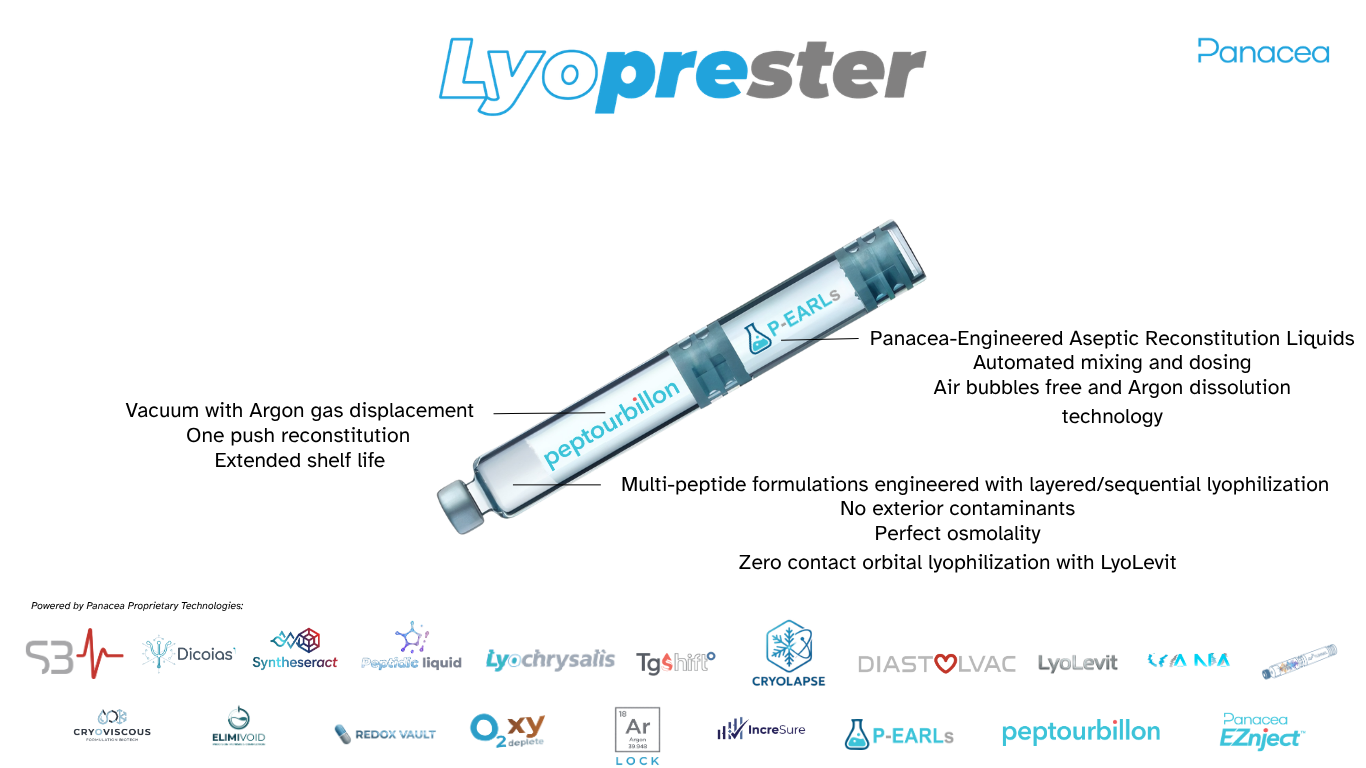
 Lyoprester®The only dual-chamber cartridge that is autoreconstitution-enabled, vacuum-sealed and argon-fillback.lyoprester.com ↗
 P-EARLs™Panacea-Engineered Aseptic Reconstitution Liquid(s) — each tuned to the peptide it wakes.p-earls.com ↗
 Peptourbillon™The layered peptide formulation architecture — single- or multi-layer, never a blend.peptourbillon.com ↗
 RF Tunnel™The RF-formed central channel through the cake.rftunnel.com ↗
 TgShift™Raises the cake’s glass-transition temperature with RF — instead of chilling below it.tgshift.com ↗
 Cryolapse™Cryogenic pressure collapse under S3Pulse™ control — vapour redistributed through the whole cake, not its surface, impeding crust formation.cryolapse.com ↗
 LyoLevit™The cake levitates and spins in high orbit — driven by ultrasound and RF.lyolevit.com ↗
 Lyochrysalis™The integrated chamber housing the whole drying stack.lyochrysalis.com ↗
 S3Pulse™The control brain for every piece of Panacea hardware.s3pulse.com ↗
 Liquiprester™The single-liquid cartridge engineered so multiple peptide APIs coexist in one shared vehicle.liquiprester.com ↗
 Syntheseract™Continuous-flow peptide synthesis in a special, very fast and economical way.syntheseract.com ↗
 CFSPPS™Continuous-flow solid-phase peptide synthesis, written as its own category.cfspps.com ↗
 OxyDeplete™Degassing plus no-headspace doctrine — the oxygen-starved seal.oxydeplete.com ↗
 ArgonLock™The final inert-atmosphere lock under argon.argonlock.com ↗
 RedoxVault™Separation, not merely suppression — redox isolation in lipid micro-reservoirs.redoxvault.com ↗
 PleniDose™The shared filling gantry — one machine filling both the dual-chamber Lyoprester and the liquid Liquiprester.plenidose.com ↗
 IncreSure™The dose-metrology layer — verified API per pen increment.incresure.com ↗
 ElimiVoid™Front-void elimination without touching the metered dose.elimivoid.com ↗
 Cryoviscous™The characterised cold, high-viscosity, low-mobility conditioning state.cryoviscous.com ↗
 Vana Machine™Vacuum–Argon–Nitrogen Architecture — draws the air and nitrogen out of the cake and backfills with argon; in a separate process, the same machine makes the P-EARLs bubble-free.www.vanamachine.com ↗
 EZnject™The disposable auto-injector pen built around the Lyoprester.panaceaeznject.com ↗
 Dicoias ΨThe computed-chemistry advisory — every substance reduced to a vector across physical, electronic and formulation space.dcppsi.com ↗
 SealoPrester™Aseptic Cartridge Closure System — Seal o’ Precision + Sterility.sealoprester.com ↗
 Peptidic LiquidThe peptide formulation in solution — the active plus its buffers, cryoprotectants, lyoprotectants and scaffolders.peptidicliquid.com ↗
 DiastolVAC™Biomimetic diastolic vacuum control — the pneumatic circulatory system of the machine: pumps, valves and sensors as one ensemble.diastolvac.com ↗
 KineticON™Motion Integrity Architecture — the motion-control layer that lets the machine know what happened on every axis move.kineticon.org ↗
PubMed has no record matching "propolis bioactives" OR "propolis chemotypes" as an indexed phrase — the review resumes when one appears, refreshed weekly.